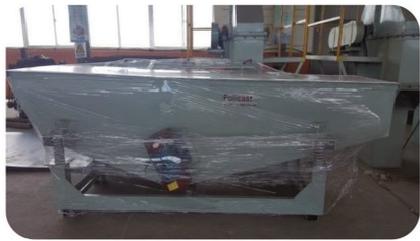
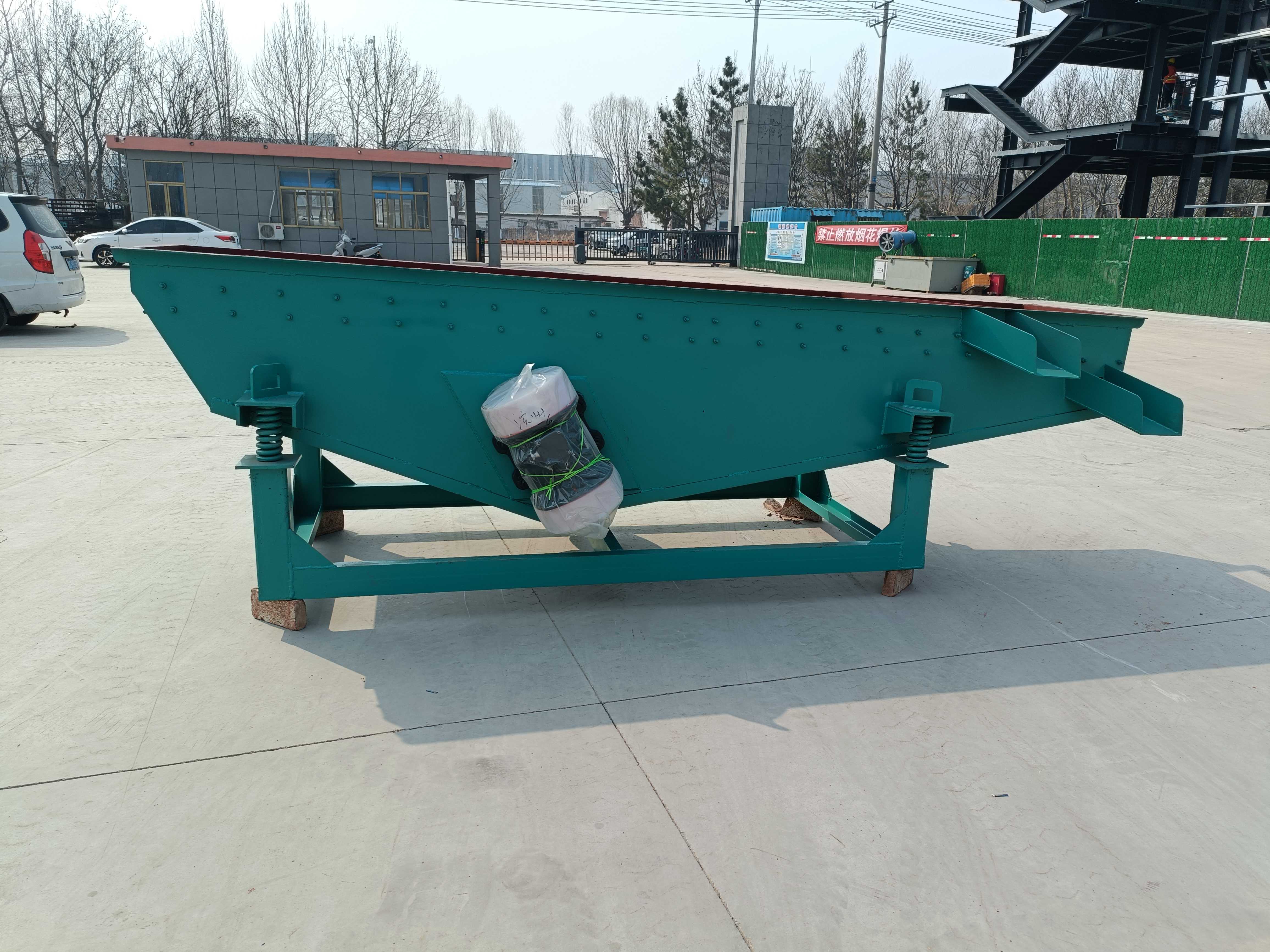
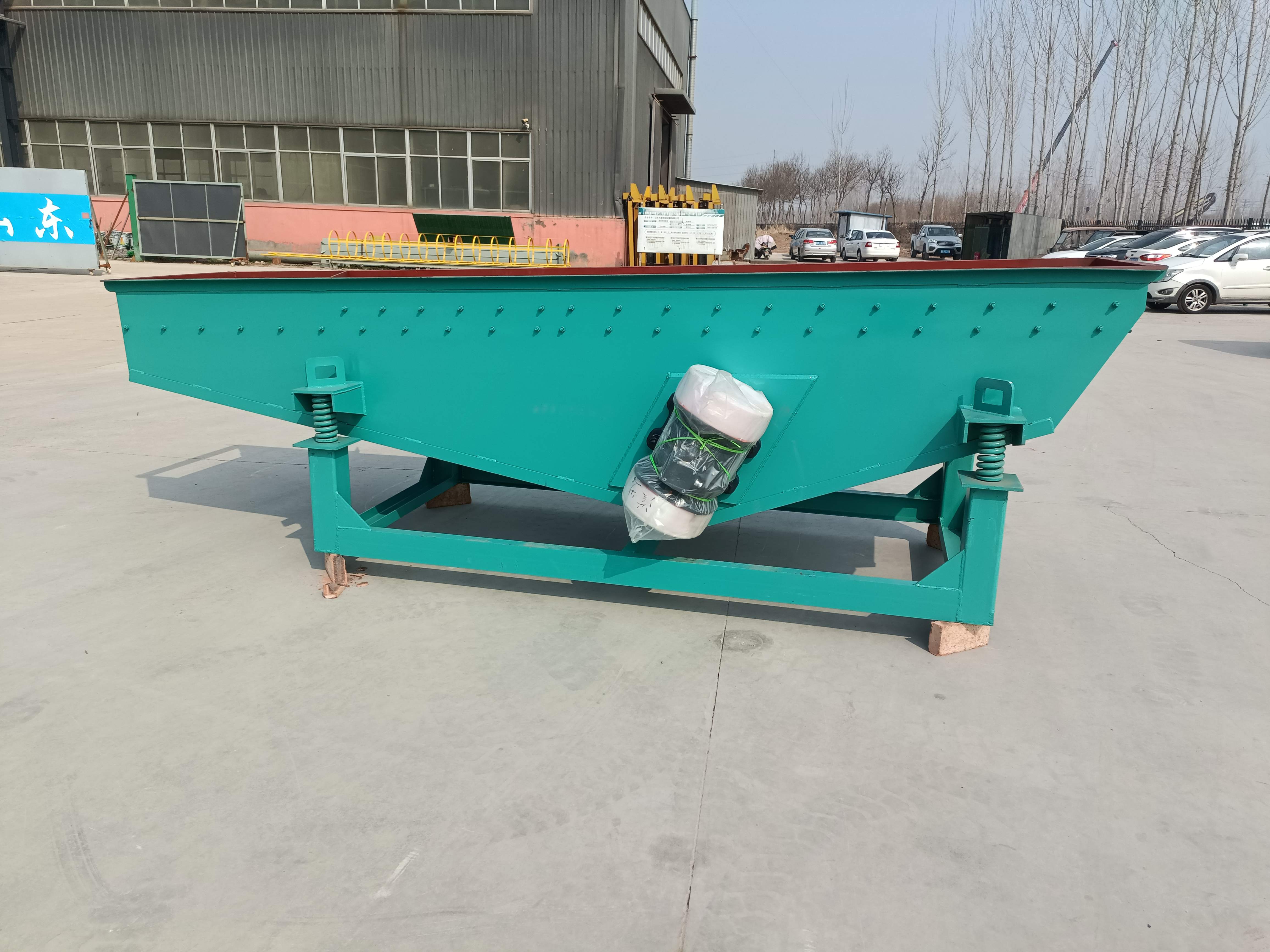
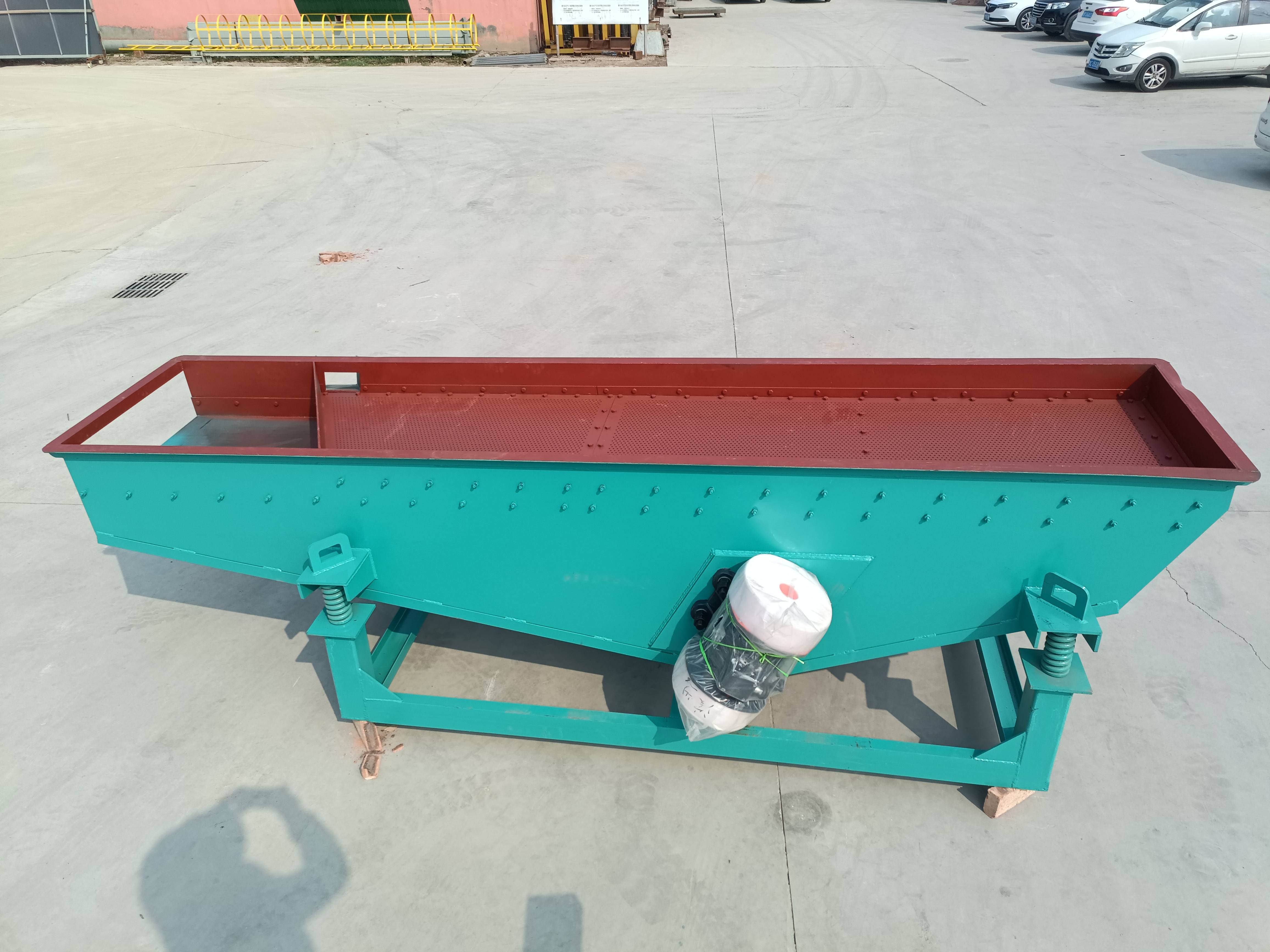
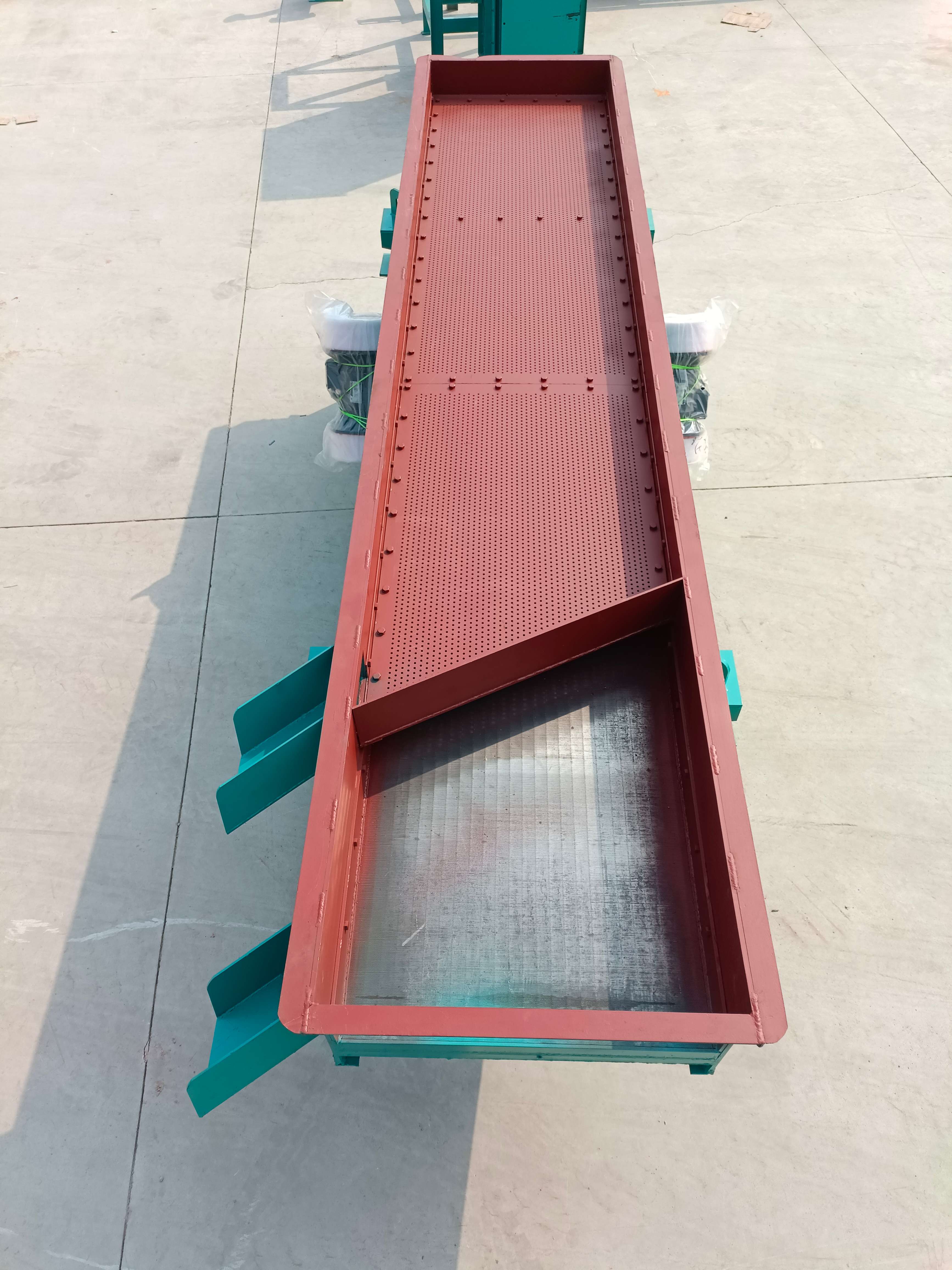
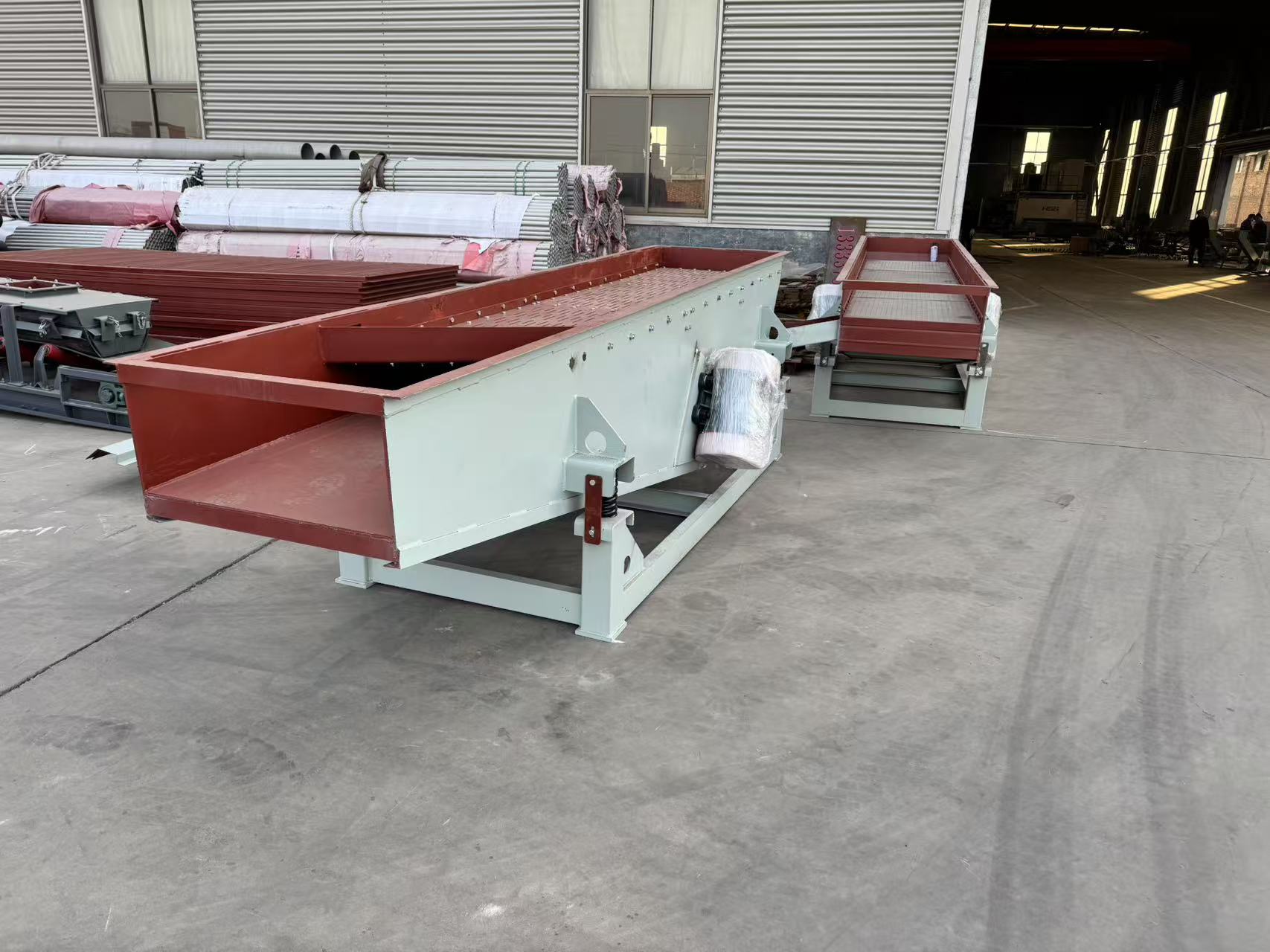
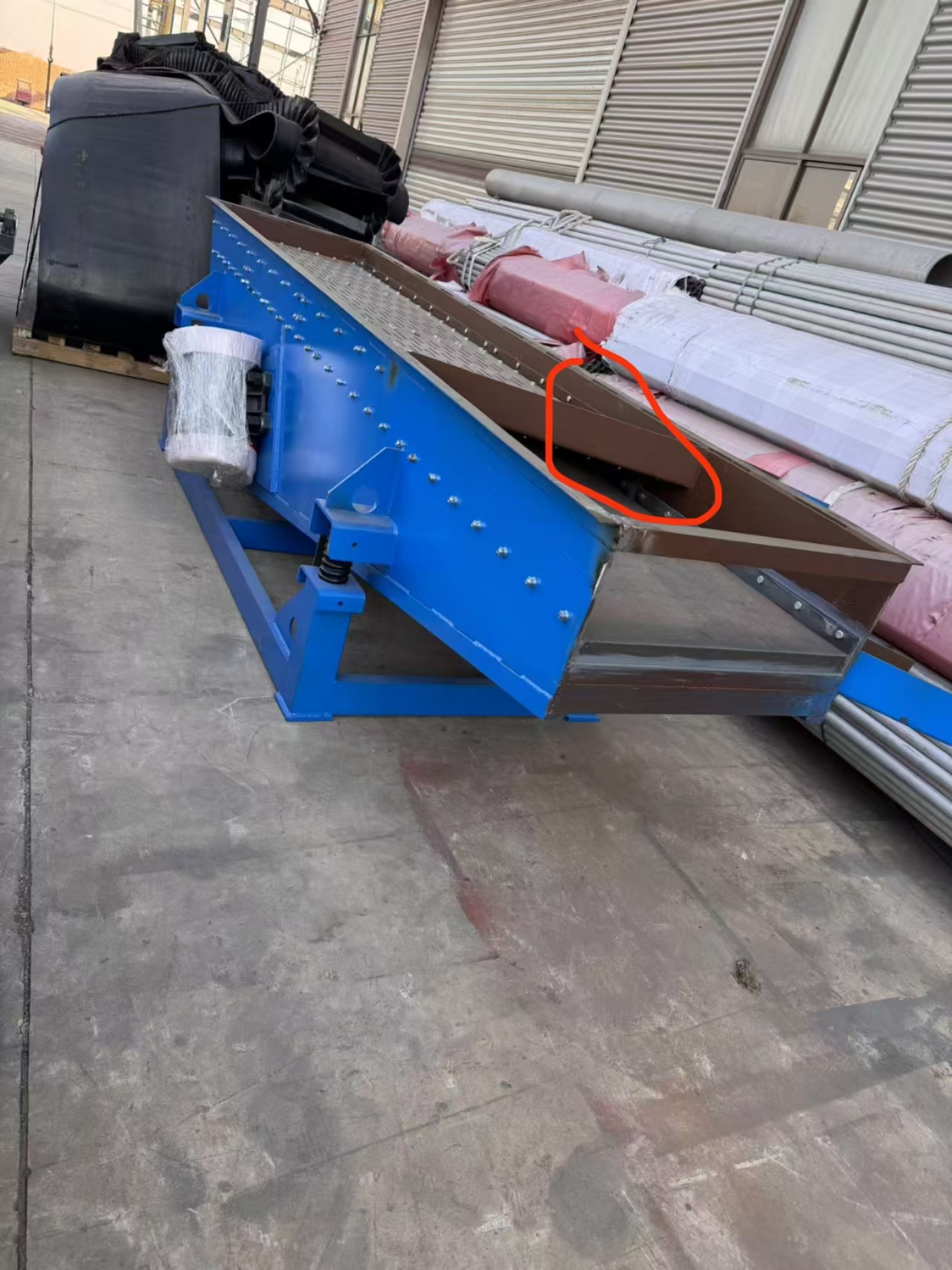
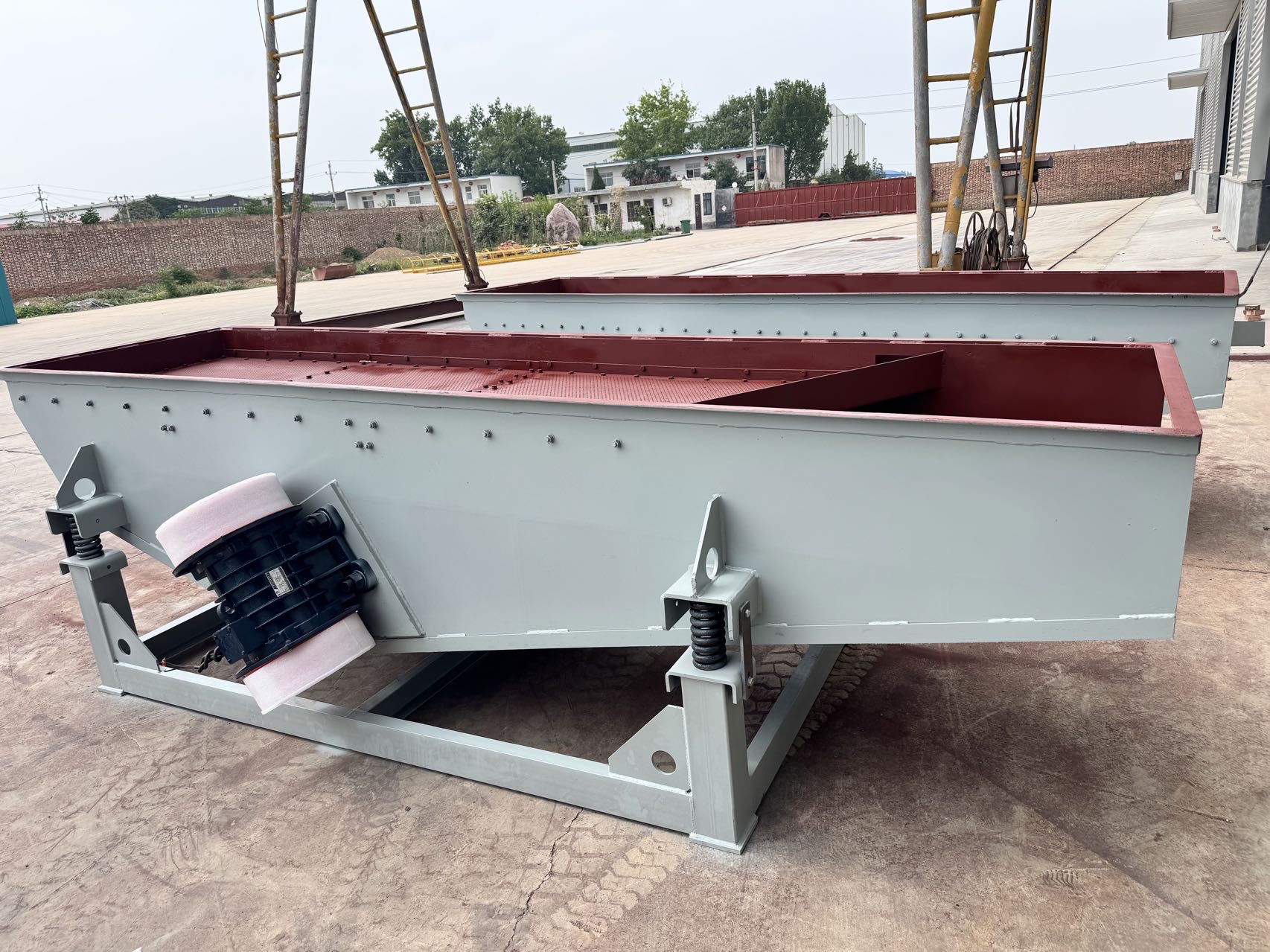
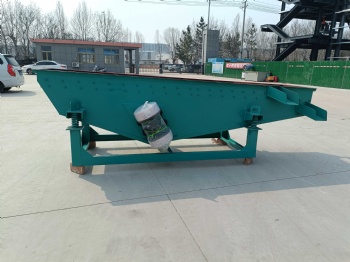
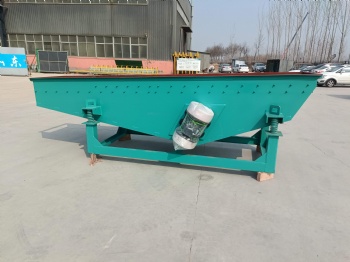
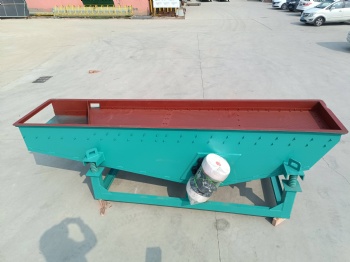
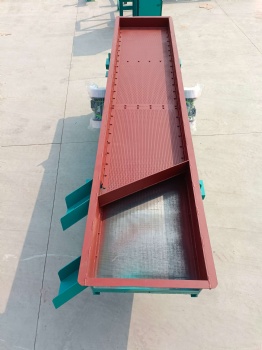
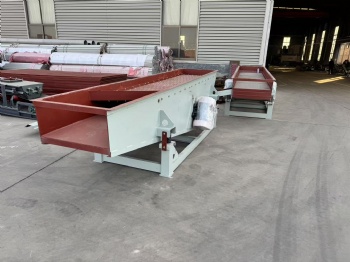
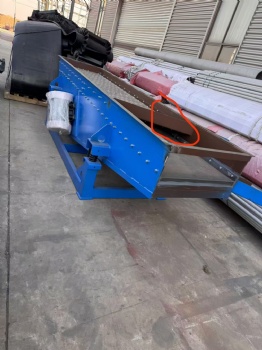
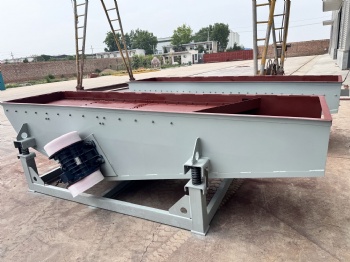
The linear vibrating screen is driven by two vibrating motors. When the two vibrating motors rotate synchronously and in opposite directions, the excitation forces generated by their eccentric blocks cancel each other out in the direction parallel to the motor axis, and superimpose into a resultant force in the direction perpendicular to the motor axis. Therefore, the movement trajectory of the screen machine is a straight line. The axes of the two motors have an inclination angle relative to the screen surface. Under the combined action of the excitation force and the self-gravity of the materials, the materials are thrown up on the screen surface and move forward in a jumping straight line, so as to achieve the purpose of screening and classifying the materials. It can be used in assembly lines to realize automatic operation. It has the characteristics of low energy consumption, high efficiency, simple structure, easy maintenance, and fully enclosed structure with no dust emission. The maximum screening mesh size is 400 meshes, and it can screen out materials of 7 different particle sizes.
The linear vibrating screen (linear screen) is a high-efficiency and new-type screening equipment, widely used in mining, coal, smelting, building materials, refractory materials, light industry, chemical industry and other industries. The linear vibrating screen (linear screen) has the advantages of stable and reliable operation, low consumption, low noise, long service life, stable vibration mode and high screening efficiency.
The linear vibrating screen can also screen and classify powdery and granular materials, and is widely used in plastics, abrasives, chemicals, medicine, building materials, grain, carbon, chemical fertilizers and other industries.
The vertical sand temperature cooling tank is mainly improved and designed based on the first-generation horizontal tube sand temperature regulator for lost foam sand. The design principle of this equipment is to arrange the water pipes vertically to reduce the friction of sand on the water pipes. It cools the reclaimed sand of natural quartz sand and precious pearl sand to meet the requirements of the production process. It has the following characteristics:
It can cool the used sand to below 55 degrees Celsius, with stable working performance.
It can serve two purposes with one machine, both cooling and heating, to meet the requirements of different processes.
Adopting a vertical tube structure, it is convenient to use and maintain.
Based on years of practical experience of the company's technology and customer needs, the vertical sand temperature cooling tank is a new type of vertical water pipe cooling equipment designed to meet the automatic operation requirements of large-scale lost foam sand processing production lines at home and abroad. The equipment has undergone rigorous testing, featuring good cooling effect and reduced friction on water pipes. It is mainly composed of hundreds of cooling water pipes, equipment main body, temperature controller, sand dropping valve, level gauge, electrical control system and other components. During the falling process, the sand exchanges heat with the water in the water pipes to achieve the purpose of adjusting the sand temperature. It is equipped with critical (55 degrees Celsius) temperature detection, which can preset the sand temperature, and the production capacity ranges from 5t/h to 60t/h.
The water inlets and outlets of the vertical sand temperature cooling tank not only adopt valve pressure control, but also have different models designed at the inlet and outlet parts, so as to form a pressure difference of water in the equipment and ensure the cooling effect. Since its launch, the vertical sand temperature cooling tank has been the most favored unpowered cooling equipment by customers. It has stable performance, few failures and is famous for its excellent cooling effect.
| Model | Screen Surface Specification | Layers | Screen Mesh Size | Feed Particle Size | Processing Capacity | Motor Power | Weight | Vibration Frequency | Double Amplitude | Screen Inclination Angle | Overall Dimension |
(Length × Width) | Layer | mm | mm | (t/h) | kw | kg | (Hz) | (mm) | ℃ | Length × Width × Height | |
| ZSG1237 | 3700×1200 | 1 | 4-50 | ≤200 | 10-100 | 5.5×2 | 1750 | 16 | 6-8 | 15 | 3800×2050×1920 |
| 2ZSG1237 | 3700×1200 | 2 | 4-50 | ≤200 | 10-100 | 5.5×2 | 2345 | 16 | 6-8 | 15 | 3800×2050×2200 |
| ZSG1443 | 4300×1400 | 1 | 4-50 | ≤200 | 10-150 | 5.5×2 | 4100 | 16 | 6-8 | 15 | 4500×3040×2500 |
| 2ZSG1443 | 4300×1400 | 2 | 4-50 | ≤200 | 10-150 | 5.5×2 | 4900 | 16 | 6-8 | 15 | 4500×3040×2700 |
| 3ZSG1443 | 4300×1400 | 3 | 4-50 | ≤200 | 10-150 | 5.5×2 | 5270 | 16 | 6-8 | 15 | 4500×3040×2820 |
| 2ZSG1548 | 4800×1500 | 2 | 5-50 | ≤200 | 15-200 | 7.5×2 | 5336 | 16 | 8-10 | 15 | 4800×3140×2814 |
| 3ZSG1548 | 4800×1500 | 3 | 5-50 | ≤200 | 15-200 | 7.5×2 | 5900 | 16 | 8-10 | 15 | 4799×3140×3014 |
| 2ZSG1848 | 4800×1800 | 2 | 5-50 | ≤300 | 50-500 | 7.5×2 | 6189 | 16 | 8-10 | 15 | 4799×3440×2814 |
| 3ZSG1848 | 4800×1800 | 3 | 5-50 | ≤300 | 50-500 | 7.5×2 | 6750 | 16 | 8-10 | 15 | 4799×3440×3014 |
| 4ZSG1848 | 4800×1800 | 4 | 5-50 | ≤200 | 50-500 | 11×2 | 7000 | 16 | 8-10 | 15 | 4799×3440×3503 |
| 2ZSG1860 | 6000×1800 | 2 | 5-150 | ≤300 | 80-600 | 11×2 | 8950 | 16 | 8-10 | 15 | 6000×3440 |
The basic principle is to convert the rotational motion of the motor into three-dimensional motion (horizontal, vertical, and inclined) through the counterweights (unbalanced counterweights) installed at the upper and lower ends of the motor shaft, and then transmit this motion to the screen surface. Changing the phase angle of the upper and lower counterweights can change the traveling direction of the raw materials.
This series of motors can continuously output the rated excitation force when the following conditions are met:
This screen machine is mainly composed of a screen box, screen frame, screen mesh, vibrating motor, motor base, vibration-damping spring, support, etc.
Regularly check whether the coarse mesh, fine mesh and springs are fatigued or damaged, and whether various parts of the machine body are damaged due to vibration. The parts that need lubrication must be oiled and lubricated.
Shandong Kewei Casting Equipment Co., Ltd. is a comprehensive enterprise integrating the research, production and sales of lost foam casting equipment, automatic lost foam production lines and EPS (Expandable Polystyrene).
Tags: Lost Foam Casting Equipment , Automatic Lost Foam Production Line , EPS (Expandable Polystyrene)


LiveChatX


 Send Email
 售前客服
售前客服 WhatsApp